 EN
Blanket Wholesale: Fabric Selection Guide
For blanket wholesale, the first useful decision is not “Which fabric is nicest?” It is “What job must this blanket do in the buyer’s assortment?” A hotel replenishing rooms, a retailer building a seasonal throw program, and a distributor preparing a baby-gift range need different specifications. As a B2B sourcing planner, I would define that use case before comparing samples, because blanket wholesale works better when assortment fit, specification clarity, and supplier communication move together.
The terminology can sound technical. The buyer’s next question is simpler: who will use the item, where, and how often will it be washed or handled? A fabric label alone does not settle those questions. In blanket wholesale, construction, finished dimensions, edge treatment, decoration method, packing, and care instructions can all change the practical result.
Start Every Blanket Wholesale Brief With the End Use
Write a short buying brief before requesting a quotation. State the sales channel, climate or season, target hand feel, intended user, retail price position, packaging format, and required delivery window. This prevents a supplier from quoting a blanket that is technically similar but commercially unsuitable. For blanket wholesale, a clear brief also makes MOQ discussions more meaningful: a plain stock-color throw and a developed pattern with custom packaging may require very different production planning.
- Retail throws: prioritize display, color stories, tactile expectations, and the size customers expect for sofas or beds.
- Hospitality or institutional programs: prioritize repeatability, laundering routine, labeling, and a consistent replacement specification.
- Baby or gifting ranges: define age-appropriate dimensions, trim details, labeling, and pack presentation before fabric comparison.
- Promotional or travel uses: specify decoration area, folding method, pack size, and the balance between feel and practical handling.
For blanket wholesale, replace the vague question “Is it soft?” with a practical one: suitable for whom, in which use conditions, and with which care routine? That turns a broad product conversation into checkpoints a factory can sample and a buyer can approve.
Compare Fabric and Construction as Separate Choices
For blanket wholesale, compare fiber content, fabric structure, weight specification, pile or surface effect, finishing, and proposed care label separately. Cotton-led options may suit buyers looking for familiar natural-fiber positioning, while synthetic or blended options can be considered where quick drying, color options, surface effects, or cost targets matter. Neither route is universally right. The specification to confirm is the actual composition and construction; its practical meaning depends on the intended use.
A cellular blanket can be a useful option where buyers want an open-texture appearance and a lighter layering concept. Still, “cellular” describes a structure or visual idea, not a complete performance promise. Ask for a sample and confirm yarn, construction, finished weight, dimensions, shrinkage expectations, and care instructions. That same discipline applies when sourcing a cool blanket for summer: the phrase should lead to questions about weight, breathability expectations, room climate, and laundering rather than an unverified comfort claim.
| Selection factor | Questions for the supplier | Why it matters in blanket wholesale |
|---|---|---|
| Fiber and blend | What is the declared composition and how is it shown on the label? | It aligns the item with the buyer’s material and care brief. |
| Construction and surface | Is it woven, knitted, brushed, quilted, or cellular? What sample represents bulk production? | Hand feel, appearance, and handling depend on more than a fiber name. |
| Finished size | What are the finished dimensions and acceptable tolerances after relevant processing? | Nominal size alone can hide differences created by cutting, sewing, washing, and packing. |
| Edges and trims | What binding, hem, fringe, tassel, or ruffle details are included? | These details affect appearance, sample approval, and inspection points. |
| Care and labeling | Which care instructions and market labels will be supplied? | Care routine is part of the product decision, not an afterthought. |
Choose Size, Style, and Seasonal Positioning Together
In blanket wholesale, size labels can mean different things across markets. Put finished length and width on the RFQ, then define whether the item is a bed layer, a throw, a travel piece, or a nursery item. If a range includes several sizes, request a size matrix rather than treating names such as “queen” or “throw” as enough detail. This is particularly useful when a cellular blanket program is sold as a layer rather than a full bed covering.
Style choices deserve the same discipline. Confirm color references, pattern scale, reverse side, decorative trim, logo placement, labels, hangtags, and carton marks. A wholesale assortment is not one buyer profile: a supermarket buyer may need simple shelf recognition, while a boutique buyer may put more weight on texture and story. For blanket wholesale, asking those questions early reduces sample revisions later.
Use Confirmed Products as Discussion Starters
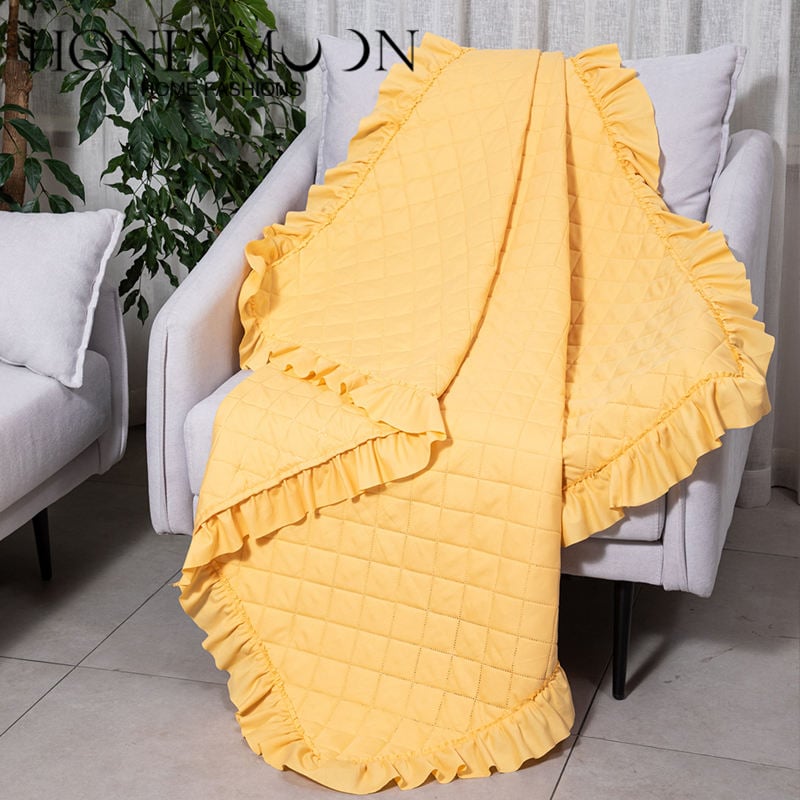
When building a brief, it can help to review confirmed catalog examples without assuming details beyond their published titles. The catalog includes a summer blanket and ruffle throw listing and a wearable knitted tassel throw listing. For blanket wholesale, use such references to discuss the direction—seasonal, decorative, travel, or throw—not as proof of unconfirmed composition, MOQ, test results, or performance.
Turn MOQ, Samples, and Lead Time Into One Comparison
A low MOQ is only useful if the color, trim, packing, and delivery assumptions also work. Ask each supplier to distinguish sample timing, approval time, material preparation, bulk production, inspection, and dispatch. For blanket wholesale, compare like with like: the same dimensions, construction, decoration, packaging, quantity, and destination assumptions. Otherwise a lower quotation may simply represent a different product scope.
- Request a specification sheet and confirm which points are fixed versus open for development.
- Approve a representative sample, including color, hand feel, dimensions, trim, label, and packaging where relevant.
- Record the MOQ by color, size, design, and packaging configuration.
- Ask for a production calendar that identifies approval and material milestones.
- Agree how changes after sample approval affect price and lead time.
Build a Practical Quality-Acceptance Plan
For blanket wholesale, quality control should begin with the approved sample, not only with the final inspection. Create a check sheet covering composition label, color reference, finished measurements, construction, edge or trim workmanship, surface appearance, cleanliness, labeling, folding, polybag or carton requirements, and quantity. Inspection guidance for soft goods commonly covers fabric, seams, measurements, labels, and packing as separate checkpoints; the sampling plan and acceptance level should be agreed in the purchase documents rather than assumed.
For a cool blanket for summer, also ensure the claim language used on packaging matches what has actually been specified and approved. If the buyer needs a particular test, market label, or wash standard, put it in the RFQ and confirm feasibility before an order is placed. This is more useful than broad promotional wording because it gives both sides a verifiable basis for acceptance.
Blanket Wholesale Buyer Checklist
- Is the use case and target channel defined?
- Are composition, construction, finish, color, and finished dimensions written down?
- Have care instructions, labels, and packaging been reviewed for the destination market?
- Does the approved sample represent the requested bulk specification?
- Are MOQ, sample milestones, lead time, and change-control assumptions comparable across quotes?
- Does the quality plan name the measurements, workmanship, labeling, and packing checks?
A sound blanket wholesale decision is rarely made on fabric alone. Start with the retail or end-use brief, compare matched specifications, and use samples plus an agreed acceptance plan to close the gaps. That approach gives overseas buyers a clearer way to select a cellular blanket, assess a cool blanket for summer, or develop another blanket category with fewer late-stage surprises.