
 EN
Bedsets: Market Positioning Guide
For an overseas buyer, bedsets are not a single product category. They are a collection decision: which pieces are included, which market and bed dimensions they fit, how the textile should be positioned, and what the supplier needs to confirm before an order moves forward. From a B2B sourcing planner’s perspective, the useful starting point is not a fabric label alone. It is the retail role, target customer, and specification brief behind the range.
The word bedsets can also be ambiguous in search results, where it may mean bedroom furniture or textile bedding. A buyer-facing page should remove that ambiguity early. Define the textile components, give measured dimensions rather than relying on regional size names, and distinguish confirmed specifications from options that still require approval.
Start with the market role for bedsets
Positioning bedsets starts with the channel. A supermarket assortment may need clear price-tier architecture, readable pack information, and easy size navigation. An online collection may need stronger photography, component clarity, and filters for bed size, material, or style. Hospitality sourcing may place greater weight on care routines, replenishment planning, and documented construction requirements. None of these positions is automatically right for every buyer; the better fit depends on the intended market and the approved product specification.
Before selecting individual bedsets, write a one-sentence assortment brief: target country, channel, intended bed sizes, desired set type, material direction, packaging expectations, and the decision maker’s main concern. That short brief prevents a common error: comparing a decorative retail set with a repeat-order hospitality set as though they answer the same need.
Define components before comparing materials
A set with more listed pieces is not automatically a stronger offer. The buyer needs an included-pieces matrix. Depending on the item, bedsets may combine sheets, pillowcases, a duvet cover, shams, a comforter, or other coordinated elements. State which pieces are included, which are separate, and whether the dimensions refer to the mattress, fitted sheet, flat sheet, cover, or filled top layer.
| Decision area | What to confirm for bedsets | Why it matters |
|---|---|---|
| Components | Exact pieces, quantity, and dimensions of each piece | Prevents pack and expectation mismatches |
| Fit | Mattress width, length, depth, and fitted-sheet pocket depth | Regional labels alone do not establish compatibility |
| Material | Composition, construction, finish, and approved care label | A material name is not a full specification |
| Presentation | Colourway, pattern, packaging, and channel role | Links the range to its retail or hospitality context |
For reference, HENIEMO’s confirmed site catalogue includes a comforter-set listing and a sheet-set listing. Treat these as starting points for product-page review, not as a substitute for confirming the exact configuration for a new order.
Use material as a positioning cue, not a complete answer
Material can help a buyer organize a range, yet it must be matched with construction, care, finish, and end-use. A fleece bedding set may be considered where a softer-looking, warmer visual story suits the target season or channel. The practical question is what the approved composition, weight, pile or surface construction, and care instructions say for that item. Do not turn the word fleece into an unsupported performance promise.
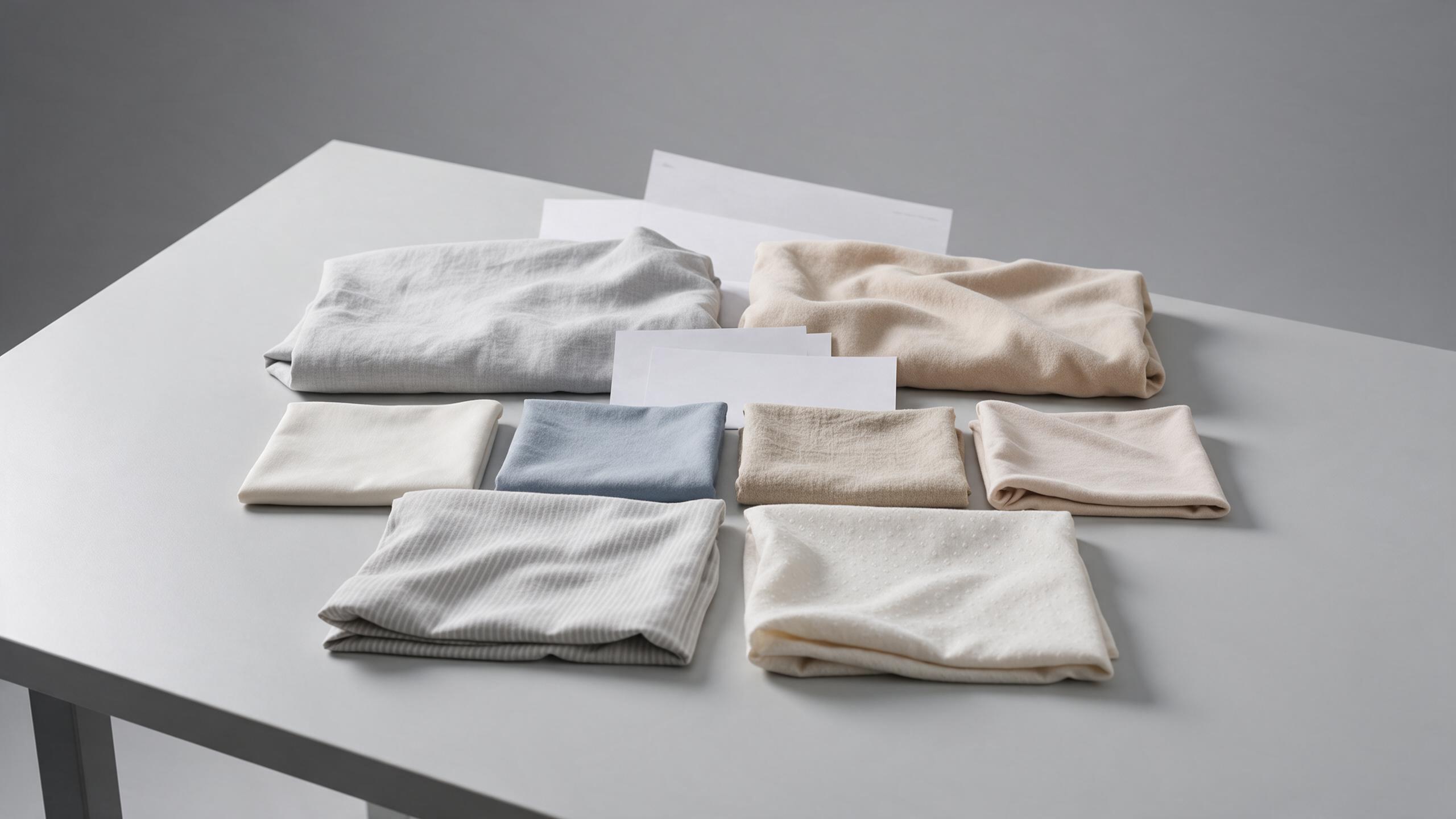
A silk bedding set can occupy a more refined or gift-oriented position, but the supplier discussion still needs to cover fibre content, fabric construction, care-label requirements, colour standard, packaging, and market language. A silk bedding set should not be described as suitable for every sleeper or retail setting. Instead, compare its approved care and presentation requirements with the routine the buyer expects customers or operations teams to support.
This applies across bedsets: confirm the set definition first, compare material and construction next, and assess style after that. Colour and fabric matter, but fit and care can carry just as much weight in an overseas assortment.
Make size and style easy to buy
Size names such as Twin, Full, Queen, King, or California King are common retail navigation terms, but they should not travel across markets without measurements. For bedsets, request a dimension sheet that lists each piece in the target unit, plus tolerances and mattress-depth requirements where fitted components are involved. A familiar size label does not remove the need to check actual dimensions and compatibility.
Style planning works more reliably after these measurements are fixed. Build a small style architecture rather than a long unstructured colour list: core neutrals for repeatability, selected pattern or seasonal directions for differentiation, and a clear rule for which pillowcase or sham designs belong with each family of bedsets. Product imagery must align with the stated components so that a styled bed does not imply unlisted pieces.
Turn customization, MOQ, QC, and lead time into RFQ questions
Customization is not a generic promise. For custom bedsets, separate what is required from what needs supplier confirmation: fabric, construction, colour reference, dimensions, labels, embroidery or print approach, packaging, testing needs, and pack count. Ask the supplier to identify which options are available for the selected product rather than assuming every detail can change.
- MOQ: Request the minimum by material, colour, size, and packaging format; clarify whether development sampling and production have different thresholds.
- Quality control: Agree on an approved sample, measurement points, component count, appearance standard, labelling review, and inspection stage before bulk production.
- Lead time: Ask for a dated sequence covering material approval, sample review, production, inspection, packing, and dispatch readiness. Confirm it for the actual specification rather than using a generic estimate.
- Care: Review the item-specific care label. Textile care symbols are governed by a recognised ISO 3758 care-labelling framework, but the final instructions must match the finished product and target-market requirements.
A stronger RFQ for bedsets turns vague interest into a short list of measurable requirements. It also creates a fairer bulk comparison because each supplier responds to the same brief.
Compare bulk offers like for like
When comparing bulk bedsets, do not begin with a headline price. First align the included components, measurements, material and finish, care instructions, pack configuration, customisation assumptions, inspection requirements, commercial terms, and confirmed production schedule. One option may simplify coordination, while another may offer more replacement flexibility; neither is automatically right for every buyer.
Use a review sheet with one row per offer and a separate column for unanswered questions. If a supplier has not confirmed a detail, mark it as pending instead of silently treating it as included. This approach is especially useful when comparing a fleece bedding set with a silk bedding set, because their intended presentation, care expectations, and specification questions can differ even when both are called bedsets.
Final positioning checklist
Before moving bedsets into a collection or RFQ, check the target market, confirmed components, measured size compatibility, material and construction, approved care language, style role, pack information, customisation boundaries, MOQ, quality-control plan, and dated lead-time confirmation. HENIEMO serves global home-textile buyers, so a clear brief gives its team a practical route to review the relevant product options. Strong supplier content leaves buyers knowing what to ask, measure, and document next.