 EN
Waterproof Mattress Cover Double: Contract Buying Guide
A waterproof mattress cover double is easy to describe loosely and difficult to buy well under contract. A B2B sourcing planner should start with the purchase brief, not a fabric label or a photograph. The usable brief defines the target market, finished dimensions, mattress depth, protection scope, expected care route, pack format, and approval process. That order matters because a familiar double-size label can mean different measurements in different markets.
Retail search results tend to highlight water resistance, a fitted shape, and a surface fabric. For an overseas buyer, those are starting fields rather than a finished specification. This guide turns the waterproof mattress cover double query into questions that can be compared across quotations without assuming an unconfirmed material, capacity, certification, or delivery commitment.
1. Define the contract brief before comparing a waterproof mattress cover double
The first sourcing question is often not price but whether the brief identifies material, dimensions, packing, intended channel, and required evidence. A hotel, supermarket, online retailer, and promotional program may each need a different balance of fit, appearance, laundering, labeling, and replenishment planning.
- Market and end use: state the destination market, mattress type, retail or hospitality channel, and whether the buyer needs fitted, encasement, or other approved construction.
- Dimensions: give width, length, fitted skirt depth, tolerance, and the actual mattress-depth range to be checked. Do not rely on “double” alone.
- Protection scope: define which surfaces need a barrier and the conditions the finished item is expected to address. Ask the supplier to confirm the construction rather than translating a broad “waterproof” phrase into a performance promise.
- Commercial controls: list target order quantity, sample stage, approved packing, labeling language, inspection point, and the date by which a production lead time must be confirmed.
A concise specification sheet makes bulk comparisons more useful because every quotation responds to the same fields. It also gives merchandising, quality, and logistics teams a shared approval record.
2. Separate surface material from the waterproof barrier
A waterproof mattress cover double usually combines a sleep-side textile, a barrier layer, and a fit system. The material name alone does not describe the finished product. Ask for the fiber content and construction of the surface, the barrier material or coating description, the assembly method, and the finished weight where relevant to the brief.
TPU and vinyl are terms that appear in market discussions, but neither word settles suitability on its own. The practical question is whether the proposed construction aligns with the intended care routine, hand feel, noise expectation, and approved product documentation. Before accepting an environmental, comfort, or durability statement, request evidence tied to the exact construction and destination-market claim.
If the assortment includes a white linen duvet cover, keep the role of each item clear. A duvet cover is a removable decorative and functional layer for bedding, while a mattress protector addresses the mattress surface or enclosure. Coordinated color direction can be discussed, but it should not blur their different fit and care requirements.
3. Lock double-size fit and style details
Fit becomes visible in everyday bed-making when the corners, depth, or elastic arrangement do not align with the mattress. For a waterproof mattress cover double, document the finished dimensions and the mattress dimensions separately. Then request a sample fitted to a representative mattress before bulk approval. This is especially important when the word “double” crosses markets.
| Decision field | What to specify | What to verify before approval |
|---|---|---|
| Size | Finished width, length, depth, and tolerance | Fit on the intended mattress and regional size terminology |
| Fit system | Fitted skirt, elastic arrangement, or approved enclosure detail | Corner retention and coverage under normal handling |
| Surface appearance | Color, quilting or smooth construction, and label placement | Approved swatch, artwork, and component list |
| Barrier construction | Supplier-confirmed layer description and scope | Applicable evidence, sample review, and care-label alignment |
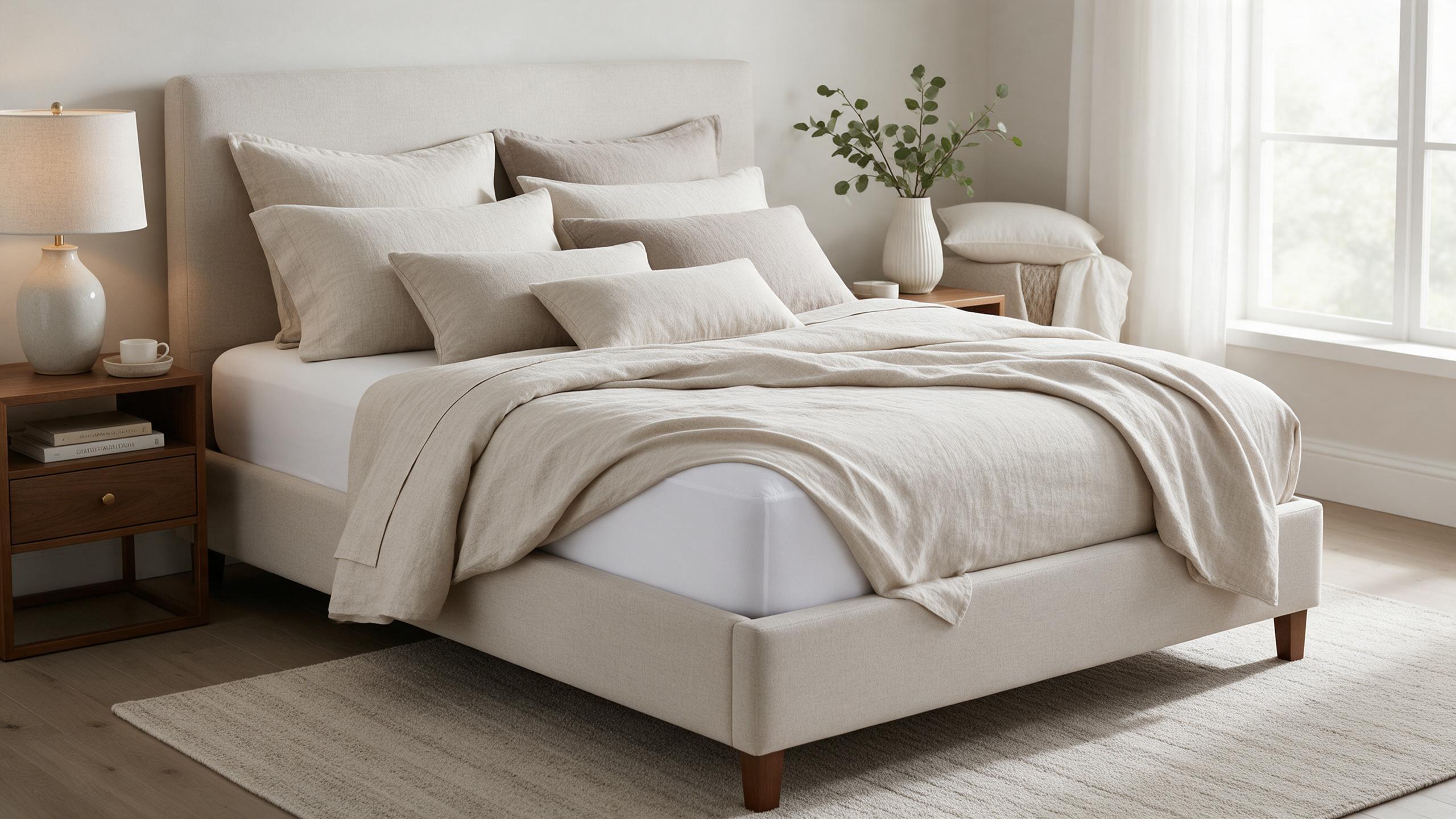
Style should be a controlled specification, not a substitute for function. If a quilted look is requested, identify it as a construction or appearance detail and ask what it changes in the finished build. Do not infer performance from the name or image alone.
4. Turn customization, MOQ, and lead time into confirmation checkpoints
Customization can include size, surface fabric, color, label, packaging, or an approved fit detail, but the available scope has to be confirmed product by product. Ask for a written feasibility response to each requested variation. For MOQ, distinguish the total order quantity from any color-, size-, material-, or packaging-level minimum. This prevents a quotation from looking comparable when its production assumptions differ.
- Send a controlled tech pack with dimensions, bill-of-material questions, artwork, pack count, and destination market.
- Request a pre-production sample or an agreed sample stage, then record what is approved and what remains open.
- Ask for the supplier’s lead-time proposal only after the material, artwork, packing, and sample assumptions are frozen. Treat it as a confirmed schedule only when documented in the contract.
- Agree the inspection stage, allowable tolerances, measurement method, and disposition process for nonconforming goods.
HENIEMO’s published home-textile context is relevant for buyers who want to navigate bedding categories, but each waterproof mattress cover double requirement still needs item-level confirmation. For coordination research, the site’s customized cationic stripe duvet cover set and microfiber crinkle duvet cover set are related bedding references. Their product pages do not establish waterproof-cover specifications, so use them only to review the surrounding collection direction.
5. Build QC around the actual buying risk
Quality control works better when it tests the points that could make the shipment unsuitable for the agreed use. Create an inspection plan that names the lot definition, sample method, dimensions to measure, visual checkpoints, packing count, label version, and the documents required before release. If a barrier claim or repeated-laundering expectation is part of the brief, define the applicable evidence or test method before production rather than adding it after a dispute.
Useful QC questions include: Does the approved sample match the signed dimension table? Is the barrier construction identified in the approved specification? Are the labels, carton marks, and pack quantities correct for the destination? Is there a documented way to handle measurement or appearance deviations? The aim is traceability, not a broad assurance phrase.
6. Put care guidance into the product decision
Care belongs in the purchase order discussion because the barrier and fabric construction may respond differently to washing, drying, bleach, heat, and stain treatment. General care resources commonly begin with checking the item’s label; that is also the safe contract rule. Specify the care-label language, symbols, test basis if needed, and the channel’s realistic laundering route. Do not use a general cold-wash or low-heat recommendation as a universal instruction unless the approved item label supports it.
Related bed pillows can sit in the same bedroom program, but they require their own fill, cover, support-preference, and care questions. Keeping components separate helps a buyer avoid assuming that one care regime applies across a whole bedding assortment.
7. Use a like-for-like bulk comparison sheet
Before awarding a contract, compare every candidate against the same decision fields: finished dimensions, fit construction, surface and barrier description, sample status, care-label proposal, packing, minimums, quality checkpoints, and documented lead-time assumptions. A lower unit figure is not directly comparable if the quotation omits an approved pack format, uses a different depth, or has not addressed inspection requirements.
End with an RFQ that makes missing inputs visible. For a waterproof mattress cover double, request the target market, exact mattress dimensions, intended use, required protective scope, preferred materials to evaluate, artwork and packaging needs, order breakdown, sample requirement, QC points, and the date by which the supplier must confirm feasibility and lead time. That gives overseas buyers a clearer negotiation record while leaving room for product-specific facts that still need verification.