
 EN
King Size Bed In A Bag: Care Label Guide
For an overseas buyer, a king size bed in a bag is not simply a coordinated bedroom look. It is a bundled specification: named pieces, finished dimensions, fabric and filling information, a care-label routine, and packaging details that must make sense together. A set can look complete in an image while leaving a retailer, hotel buyer, or distributor with basic questions about fit and maintenance. This guide turns those questions into a practical buying and quality-review process.
Start with the buyer’s actual use case
A king size bed in a bag can suit a retail reset, a guest-room program, a promotional range, or a coordinated collection launch. The right brief changes with the channel. A retailer may need a consistent piece count and shelf-ready pack information; a hospitality buyer may prioritize a documented laundry routine; a distributor may need clear size and labeling language for several markets. Before comparing colors, write down the intended market, bed type, expected components, and the person who will approve the care information.
That sounds technical, but the next question is simple: what must the king size bed in a bag do after it reaches the bed? A decorative set, a frequently washed room set, and a display-led assortment can require different material, construction, and pack choices. Starting with the use context keeps the request from becoming a list of attractive but poorly specified samples.
Define “in a bag” before comparing a set
The phrase king size bed in a bag does not prescribe a fixed number of pieces. Depending on the offer, it may include a comforter or coverlet, fitted and flat sheets, pillowcases, shams, decorative cushions, or a bed skirt. The component list is therefore a purchase requirement, not a detail to infer from photography. Ask the supplier to identify each item, its finished dimensions, its quantity per set, and whether the carrying bag is part of the saleable pack or only transit packaging.
For a buying team comparing a king size bed spread with a full bedding set, separate the visual top layer from the rest of the package. A bed spread may be the key styling piece, while sheets and pillow items may be optional or supplied separately. The phrase bed spread king can also mean different constructions across markets, so use measurements and a piece list rather than the phrase alone.
Confirm king dimensions before approving the style
A size label is not enough. A standard U.S. king mattress is commonly listed at 76 by 80 inches, or about 193 by 203 cm, but that reference does not establish the finished size of every king size bed in a bag. California king, split king, regional king labels, mattress depth, and desired overhang can all change the specification. Request the mattress reference, fitted-sheet pocket depth where relevant, the comforter or coverlet drop, and a tolerance policy in the same unit system.
Use a simple approval table for each king size bed in a bag candidate:
| Checkpoint | What to request | Why it matters |
|---|---|---|
| Bed reference | Target-market mattress width, length, and depth | Prevents a king label from standing in for fit. |
| Finished dimensions | Each sheet, top layer, sham, and pillowcase measurement | Makes like-for-like comparison possible. |
| Piece definition | Named list and quantity for every item | Avoids an assumed component list. |
| Pack format | Bag, insert, barcode area, and outer-carton requirements | Connects the set to its retail or distribution route. |
Read the care label as a selection tool
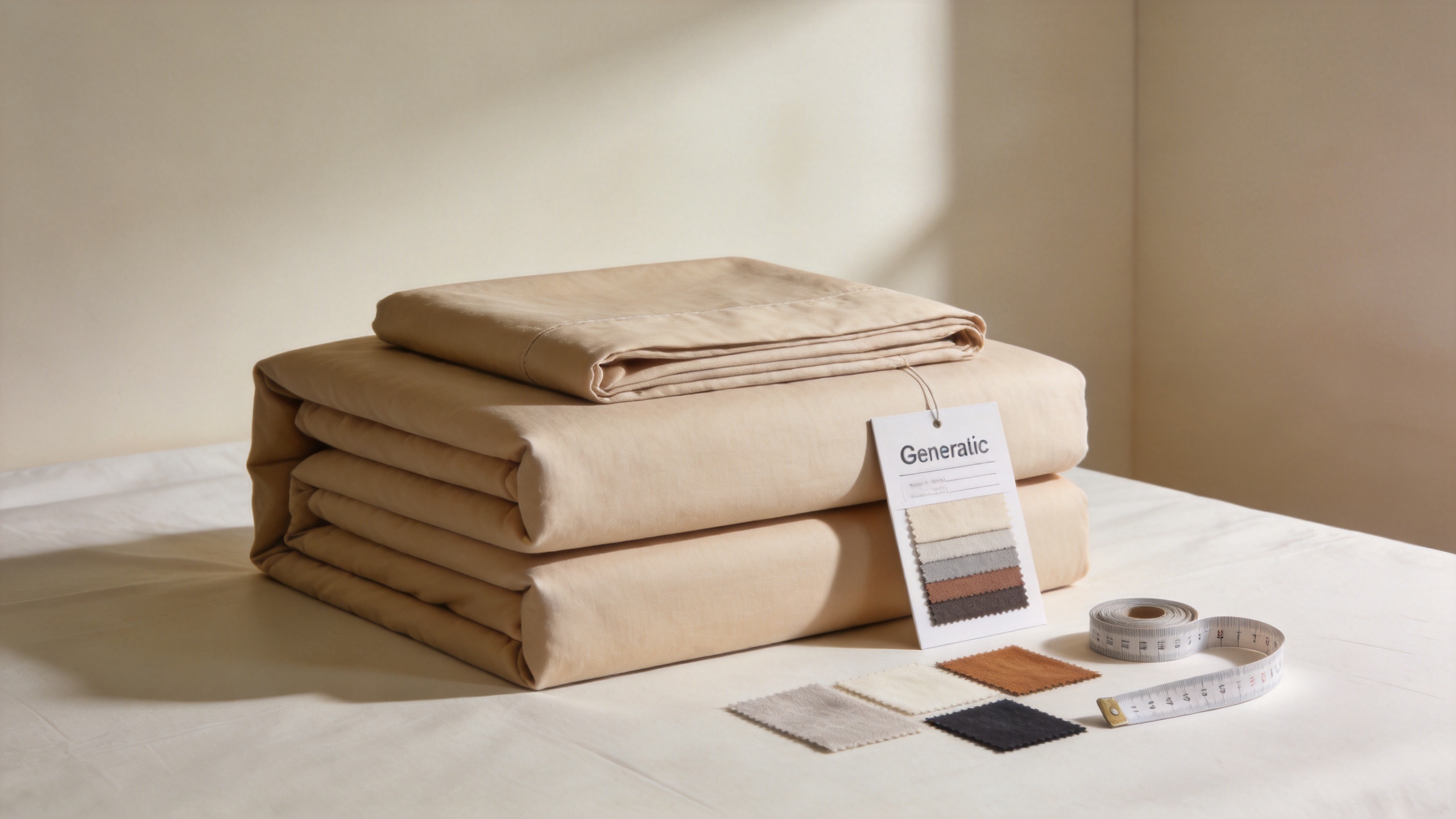
Care should be considered before the purchase order, not after the first wash. For a king size bed in a bag, ask for the proposed care label and any supporting care instructions early in sampling. Review whether the wording tells the user how to wash, dry, bleach, iron, or handle known limitations. A label that says “machine wash” without temperature, drying, or warning context may not answer the questions a buyer needs for the intended routine.
Regulatory scope differs by product and market, so do not assume one market’s rule applies everywhere. As a practical control, request complete regular-care guidance and verify that it matches the final materials and construction. If the top layer and sheets have different instructions, make that distinction clear rather than treating the whole king size bed in a bag as one fabric. The same principle applies to trim, decorative attachments, and closures: ask what routine the label supports and what cautions the customer should see.
- Compare the care label with the approved bill of materials and construction sheet.
- Ask whether color-separation, drying-temperature, or bleaching cautions are needed.
- Check that the label language and care symbols are appropriate for the destination market.
- Approve label placement, legibility, and translation with the final packaging artwork.
Compare materials and construction without over-reading the name
Material names are useful starting points, not a complete specification. When reviewing a king size bed in a bag, request the declared fiber content, fabric construction or weave where relevant, filling description if there is a filled top layer, closure details, and the care basis for each component. This lets the buyer compare the same criteria across samples instead of treating a soft-looking image or a broad material term as evidence of performance.
Style still matters. For example, a confirmed site listing for a CozyLux seersucker bedding-set comforter can be a useful reference when discussing a coordinated comforter-set presentation. Its link confirms that the listing exists; it does not confirm the specifications required for your own king program. Ask for your target size, components, materials, care label, and artwork as separate approvals.
Turn customization, MOQ, and lead time into documented questions
Customization is a discussion to scope, not a promise to assume. A useful request for a king size bed in a bag states the target size, component list, color or pattern direction, label language, packaging format, destination, forecast quantity, and required delivery window. Then ask the supplier which elements can be evaluated, what minimum order quantity applies to each configuration, whether sampling is needed before bulk production, and what production schedule can be confirmed after the specification is frozen.
This approach is also more useful for a king size bed spread program. A buyer can distinguish a change that affects only artwork from one that changes fabric availability, sewing operations, labeling, packaging, or order quantity. Do not approve a king size bed in a bag on a single broad statement such as “custom available”; capture the options and constraints in the quotation or specification sheet.
Set quality acceptance points before bulk production
A buyer’s inspection plan for a king size bed in a bag should mirror the approved sample and purchase documents. It can include dimensional checks, component count, appearance review, workmanship review, label and barcode verification, packaging review, and a comparison of the finished product against the approved fabric or artwork standard. The point is not to invent a universal pass/fail number. It is to agree on the method, sampling approach, tolerances, and evidence required for this order.
For a bed spread king assortment, include the visual role of the top layer in that plan: pattern placement, quilting or stitching appearance if applicable, edge finishing, and coordination with accompanying pieces. If a condition is important to the retail presentation, write it into the approved reference rather than relying on a verbal expectation.
A buyer-ready comparison checklist
- State the target market and exact king, California king, or split-king reference.
- List every component in the king size bed in a bag and its finished dimensions.
- Match material and construction information to the component it describes.
- Review the care label, warnings, symbols, placement, and destination-language needs.
- Confirm packaging, labeling, barcode, and carton requirements.
- Document customization scope, MOQ questions, sample steps, and a production schedule only after confirmation.
- Agree on inspection criteria and retain the approved sample and specification version.
Make the set easy to buy and easy to care for
A well-specified king size bed in a bag is easier to compare because it makes fit, components, care, and quality visible. First confirm the bed dimensions, then check the piece list and construction, and only after that assess the styling direction. That order protects both the buyer’s range plan and the end user’s care routine. When every item in the set has a clear role and a clear care path, the decision becomes more defensible for global purchasing teams.