
 EN
King Size Coverlet: Material Comparison Guide
A king size coverlet is often treated as a simple finishing layer, yet overseas buyers know that the label alone does not settle the decision. Fabric, construction, finished drop, wash routine, visual direction, and the factory brief all influence whether the item fits a retail range. From a B2B sourcing planner’s perspective, the useful starting point is not “Which material wins in every case?” but “Which specification suits this channel, bed format, and care expectation?”
That distinction matters because a coverlet can be marketed under the same size name while differing in face fabric, filling approach, quilting pattern, dimensions, and set components. The comparison below helps buyers evaluate a king size coverlet on matched criteria, then translate the choice into a clearer bulk inquiry.
Start with the role of the king size coverlet
A coverlet is generally a lighter decorative bed layer than a deep comforter, often used alone in milder conditions or layered with other bedding. Its exact role should be defined before material selection. For an online retail range, the priorities may be photography, color continuity, and straightforward care information. For a hospitality or department-store program, repeatable sizing, packing, and inspection points may carry more weight. Neither use case automatically points to the same fabric or construction.
It may seem like fabric is the whole story. Finished dimensions and intended use can be just as decisive. A buyer sourcing a king size coverlet should first confirm the mattress width and length, desired side and foot drop, whether pillows are covered, and which pieces are included. For reference, one published chart lists a King/California King coverlet at 108 by 96 inches, but this should be treated as an example rather than a universal specification. A super king coverlet may mean something different across target markets, so measurements belong in the purchase order, not just the product name.
Compare coverlet materials on the same criteria
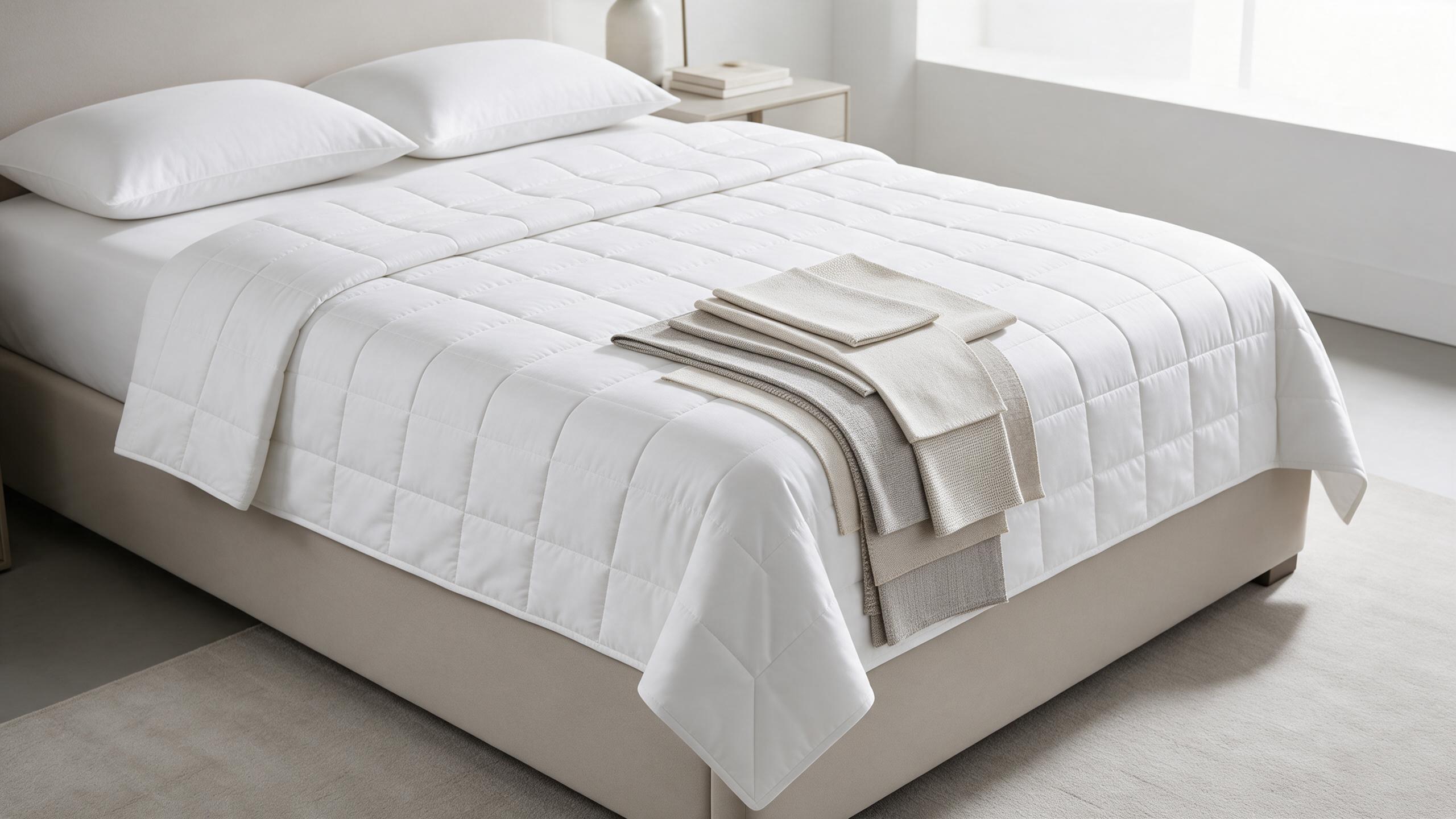
| Material direction | What to compare | Possible assortment fit | Questions to confirm |
|---|---|---|---|
| Cotton or cotton-rich | Weave, weight, shrinkage allowance, finish, colorfastness, and care label | Ranges where a natural-fiber story and familiar hand feel matter | What is the fiber content, finished GSM, quilt construction, and wash test requirement? |
| Microfiber or polyester-based | Fiber fineness, face feel, fill, pilling expectation, color consistency, and care instructions | Programs that prioritize easy-care positioning, consistent color, or value-oriented assortment planning | How does the stated construction perform after agreed wash testing, and what is the approved care route? |
| Blended construction | Blend ratio, face/back fabric, filling, stitch pattern, and finish consistency | Collections balancing design, maintenance expectations, and a specified hand feel | Which component creates the intended appearance, and which test points apply to each layer? |
Material names are not a full specification. Cotton can be a practical direction, but its weave, finish, and care treatment affect how it behaves in use. Microfiber is often associated with simple care and wrinkle resistance, while general comparisons also flag lower breathability; neither tendency should replace item-level testing. For every king size coverlet, request the composition, fabric weight, quilting or stitching details, fill information where applicable, and approved care label before positioning a benefit to customers.
Make size, drop, and style decisions together
“King” and “super king” are market labels, not reliable international measurements. Begin with the target mattress dimensions, then define the desired drop on each side and at the foot of the bed. A coverlet intended for a clean, tailored look can require a different finished size from one designed to drape over a deep mattress and layered sheets. Before choosing white bedding king size, also confirm whether the white is a bright, warm, or soft tone and approve it against a physical or digital color standard appropriate to the production process.
Style should remain connected to construction. Channel quilting, geometric stitching, a plain bound edge, or a reversible layout changes both the visual brief and inspection points. Rather than asking for a generic modern look, specify the pattern repeat, placement, edge treatment, reverse fabric, label position, and packaging presentation. This makes sample review more productive and reduces the risk that the photos imply components or details not included in the final offer.
Turn customization into an RFQ-ready brief
Customization is not one question. For a king size coverlet program, separate what is confirmed from what needs supplier confirmation: finished dimensions; fabric and color; quilting artwork; shams or other components; labels; carton and inner packing; target market; and the planned order quantity. A factory can then advise on feasible MOQ, sampling sequence, and production timing against an actual specification instead of a broad style request.
Ask for MOQ and lead-time guidance only after the coverlet’s construction and packaging are defined. MOQ may vary with fabric sourcing, dyeing or printing requirements, color count, trim, and packing configuration. Lead time likewise depends on approved materials, sample sign-off, order quantity, and production scheduling. Treat dates supplied during inquiry as planning inputs to confirm in writing, rather than as a universal promise.
QC checkpoints for bulk coverlet comparison
A bulk comparison becomes more useful when every supplier is asked the same questions. At incoming-material and production stages, buyers can request agreement on fabric weight or GSM, width, color reference, visible fabric defects, stitch density, seam alignment, skipped stitches, puckering, thread tension, finished measurements, labels, and pack count. The acceptance method and acceptable tolerance should be stated in the order documents for the specific program.
- Before sampling: confirm composition, dimensions, quilting diagram, component list, color standard, care instruction, and packing concept.
- At sample review: check visual balance on the intended king bed format, edge finishing, reverse side, measurement points, and white-tone consistency.
- Before bulk release: align inspection scope, defect definitions, labeling, carton marks, and approved sample reference.
- Before shipment: compare final measurements, appearance, workmanship, packing count, and documents against the approved specification.
Care guidance belongs in the sourcing decision
Care should not be added after a coverlet is chosen. The same fabric can suit one range and create friction in another depending on wash frequency, drying method, and customer expectations. Use the product-specific care label as the governing instruction. During development, ask what washing, drying, colorfastness, shrinkage, and appearance-retention tests are relevant to the exact material and construction. This is especially important for a white bedding king size assortment, where the approved care message should match the finished item rather than a generic fabric claim.
Use confirmed product pages as a starting point
For buyers exploring related formats, HENIEMO’s wholesale bedding set with quilt bedspread and coverlets can serve as a catalog reference for discussing the product category. The king quilt set product page is another starting point for an inquiry. Confirm all current materials, components, customization scope, MOQ, QC requirements, and lead-time details directly against the approved product specification before placing an order.
Final selection checklist
The better king size coverlet is the one whose material, construction, size, care route, and presentation match the intended channel. First lock the market-specific measurements. Next compare materials under the same composition, weight, construction, and test criteria. Then document style, components, packing, MOQ, QC, and production timing in one brief. That sequence gives an overseas buyer a defensible basis for comparing a king size coverlet or super king coverlet range without relying on a fabric name or size label alone.