
 EN
Winter Comforters: Inventory Planning Guide
For an overseas buyer, planning winter comforters is not simply a question of ordering a heavier bedding item. The useful starting point is the selling season, target climate, retail channel, and replenishment window. From a B2B sourcing planner’s perspective, the final range should connect material, fill approach, dimensions, visual direction, packing, and supplier confirmation points before the order is placed.
A winter range can include a winter duvet for customers who use a cover-and-insert system, alongside comforters sold as finished top layers. A cot duvet may belong in a separate infant or nursery assortment only when its dimensions, construction, care instructions, and local safety requirements have been confirmed. Treat each item as its own specification, rather than assuming a shared seasonal label makes them interchangeable.
Start winter comforter inventory with the selling calendar
Work backward from the date stock must be available for your channel. Allow time for specification approval, sample review, material booking, production, quality inspection, packing review, shipping, receiving, and any local launch preparation. The exact lead time must come from the selected supplier and order details; it changes with fabric, fill, construction, quantity, packing, and destination.
Before comparing winter comforters, define whether the range is for a supermarket, online store, specialty bedding program, hospitality buyer, or promotional campaign. A broader range helps only when every option has a clear role. One SKU might serve a value-led seasonal display, while another is reserved for a coordinated bedding set. Avoid loading the assortment with near-duplicate styles that compete for the same shelf space and create difficult replenishment decisions.
- Set a target arrival date and a latest acceptable production-release date.
- Forecast core sizes separately by market; familiar size names do not replace actual measurements.
- Plan an initial order and a possible replenishment path instead of treating the season as one fixed purchase.
- Record pack quantity, carton dimensions, labeling language, and barcode needs before confirming the quote.
Build the assortment around material, fill, function, size, and style
Material is only one input. When evaluating winter comforters, ask for the shell composition, fill type and weight or other approved fill specification, construction method, dimensions, included components, care-label instructions, and any documentation relevant to the intended market. These fields make comparisons more useful than a material name alone.
Material and function
Choose a shell and fill combination according to the planned user, expected room conditions, target price architecture, and care routine. Do not turn a fiber name into an automatic warmth or comfort promise. A product can be positioned around an intended winter use only after the supplier’s approved specification explains the construction and the buyer has checked how the item should be cared for.
For example, a winter duvet listing should state whether the item is an insert, what cover system it is intended to work with, and what the approved care label says. That sounds technical, but the buyer’s next question is simple: will the item fit the intended bed and the customer’s laundering routine?
Sizes and components
Build a market-specific dimension matrix rather than using labels such as single, double, queen, or king as the full brief. Confirm finished length and width, tolerance, set components, and packaging format for each SKU. For a cot duvet, keep the product stream separate from adult comforters and request the specific documentation required for its intended market before marketing or ordering it.
Style and merchandising role
Color, pattern, stitching appearance, and set coordination can influence sell-through, but they should follow fit and specification decisions. Decide whether each design is a core neutral, a seasonal accent, or part of a complete-bed story. This helps buyers compare like with like when narrowing winter comforters for a single retail program.
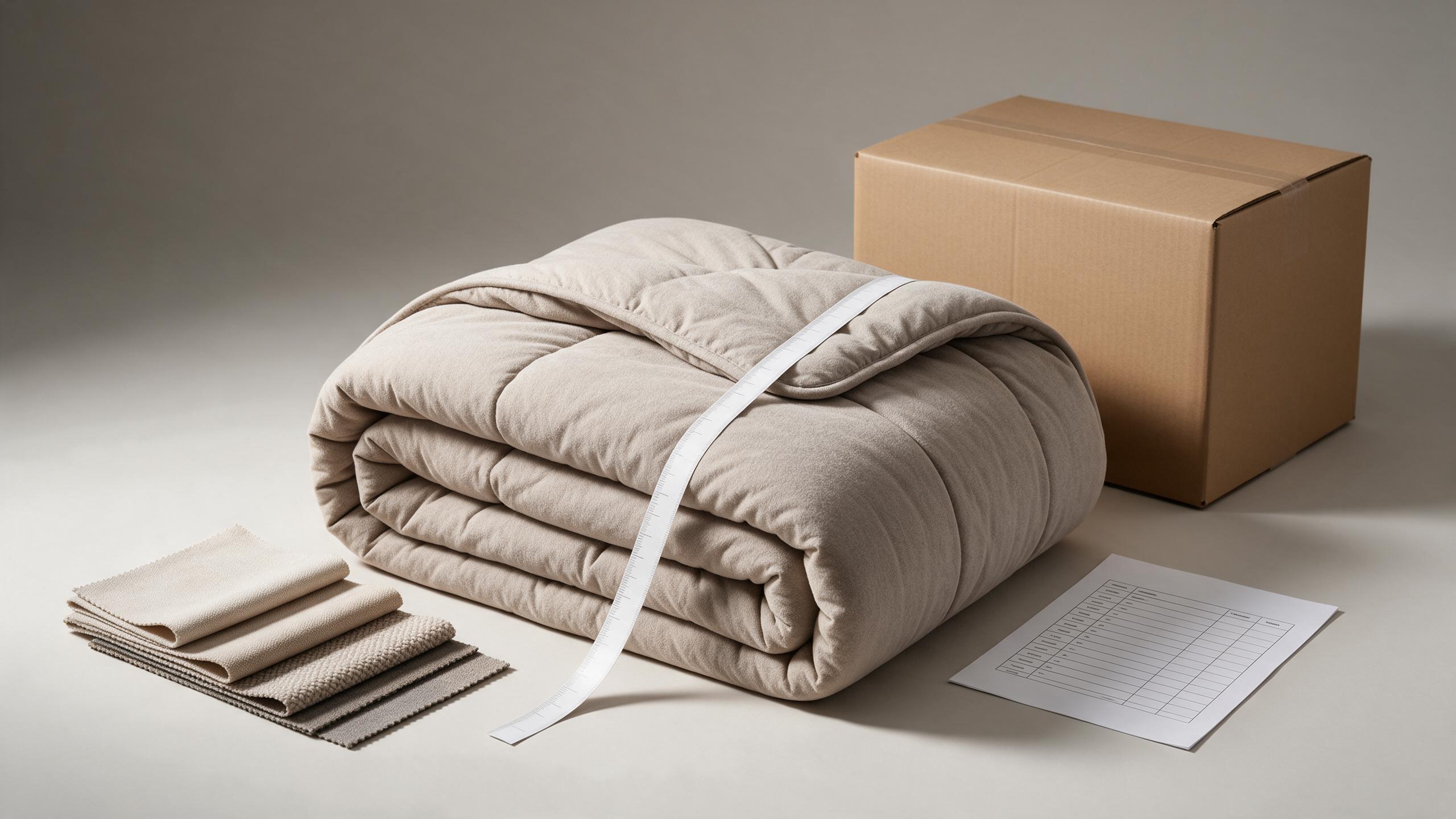
Use customization, MOQ, and QC as planning inputs
Customization may involve approved choices around dimensions, shell fabric, fill specification, color, label, insert card, and packing. Do not assume every option is available. Put each requested variation into the RFQ and ask the supplier which changes affect sampling, MOQ, cost structure, inspection points, and lead time.
MOQ is not just a commercial threshold. It interacts with raw-material purchasing, production setup, color allocation, and carton packing. Before comparing order quantities, align the specification, pack count, and demand assumptions. A smaller order with too many variations can complicate production; a larger order without a replenishment plan can create aged inventory after the cold season.
Define quality control before production begins. A practical plan identifies the approved sample, measurement points, visual standards, labeling requirements, packing checks, and the stage at which inspection will occur. If compliance, fiber-content, or safety documents matter for your market, request and review documentation for the exact item and claim rather than applying a broad statement across the range.
Compare bulk winter comforter options on matched criteria
| Decision area | What to align before comparison | Question for the supplier |
|---|---|---|
| Product role | Retail channel, target user, selling period | Which specification details distinguish this SKU from the next option? |
| Construction | Shell, fill, finished dimensions, quilting or stitching, components | Can the full approved specification and sample reference be supplied? |
| Care | Care label, wash and drying instructions, packaging guidance | What care information is approved for this exact item? |
| Commercial plan | MOQ by style and size, pack quantity, payment and shipment assumptions | Which variables change MOQ or the production schedule? |
| Quality review | Sample approval, measurement points, visual and packing checks | When can inspection occur, and what acceptance criteria will be used? |
Review confirmed product pages without overextending the details
When building a live assortment, use product records as a starting point for the next specification conversation. HENIEMO’s catalog includes an eucalyptus microfiber comforter and duvet item and a home-bedroom comforter set. Confirm current specifications, component lists, packing, and order conditions directly with the supplier before assigning either product to a winter program.
Finish with an RFQ-ready inventory brief
A usable winter comforters brief turns broad interest into decisions a supplier can answer. Include target market, channel, desired arrival date, expected quantities by size and style, full material and construction requirements, component list, care and label needs, packaging requirements, documentation to review, inspection plan, and replenishment assumptions.
First confirm the bed dimensions and product role. Then compare construction and care. Only after that should the team settle decorative preferences, MOQ, and the production plan. That sequence gives overseas buyers a clearer basis for building a winter range and a more complete starting point for supplier discussions.
Quick buyer questions before releasing winter comforters
Use this final screen before releasing a purchase order for winter comforters. It makes the decision trail visible to buying, merchandising, quality, and logistics teams.
- For these winter comforters, which market dimensions and labeled sizes have been approved?
- Has the winter duvet option been defined as an insert, with a confirmed component list and care label?
- If a cot duvet is requested, have the product-specific dimensions and market requirements been reviewed separately?
- Do the selected winter comforters have an approved pre-production sample, measurement sheet, visual standard, and packing reference?
- Which winter comforters are core replenishment SKUs, and which are limited seasonal styles?