
 EN
Mattress Topper Cover: Trend Planning Guide
For an overseas buyer, a mattress topper cover is not simply a finishing layer. It is a specification decision that affects fit, care, retail presentation, and the way a topper sits within a coordinated bedding range. As a B2B sourcing planner, I would start with the intended channel and use routine, then align the construction, size, packaging, and approval process before discussing a final selection.
Rather than asking only whether a cover feels soft, ask who will use it, which topper profile it must fit, and how it will be laundered. Behind the term mattress topper cover is usually a practical question about topper depth, fastening, surface feel, and whether the product is sold alone or alongside bed sets full and a bed skirt.
Start with the buyer’s use case
A retail range, a hospitality program, and an online private-label launch can require different versions of a mattress topper cover. Retail buyers may need a clear feature story and coordinated colors; hospitality buyers may place more weight on repeatable care instructions and replacement planning; online sellers need a specification that can be explained accurately in images, copy, and size charts. The first sourcing question is often not price but whether the brief specifies material, dimensions, closure or elastic method, packing, and target market.
- Comfort layer: clarify whether the cover is intended to hold a removable topper, add a smooth contact surface, or simply provide a decorative finish.
- Protection layer: distinguish a topper cover from a mattress protector. A protector may prioritize a barrier or surface protection, while the exact function of a topper cover depends on its approved construction.
- Assortment role: decide whether it should coordinate with bed sets full, a bed skirt, pillowcases, or duvet covers.
- Care routine: ask what wash, drying, and re-fitting conditions the target customer expects before approving fabric and trim.
Separate material, function, and construction
Material names do not fully describe a bedding product. A cotton-rich face, microfiber surface, knit layer, quilted construction, or laminated barrier can each change hand feel, drying behavior, noise, stretch, and care needs. The terminology can sound technical, but the buyer’s practical question is straightforward: will the proposed mattress topper cover fit the intended topper and care routine?
Use a comparison sheet that separates the confirmed fabric composition from the functional claim. For example, list the face fabric, reverse, fill if any, elastic or closure format, and care-label instructions in separate fields. If a waterproof or protective function is requested, define the exact test method, sample construction, and claim wording to be approved. Do not treat a material label as proof of a performance outcome.
Comparisons become misleading when mattress topper cover options differ in construction, topper height, fastening, and care instructions. Keep the sample review like-for-like: compare an agreed size and depth range, then assess seams, elastic recovery, surface appearance, and wash performance under the same approved method.
Fit is a specification, not a size name
A frequent avoidable mistake is assuming that a named bed size means the same dimensions in every target market. For a mattress topper cover, record the finished length, width, topper thickness range, pocket or skirt depth, and tolerance. Confirm whether the elastic is continuous, corner-based, or paired with straps, and request a fitted sample on the intended topper profile.
Search results commonly reference standard profiles around 12 inches and deep-pocket ranges around 13–18 inches. Treat those figures as planning examples rather than a universal requirement: the approved dimensions and the topper’s actual loft decide whether the cover will stay in place. Before choosing a mattress topper cover, have you confirmed both the mattress dimensions and the topper dimensions after unpacking?
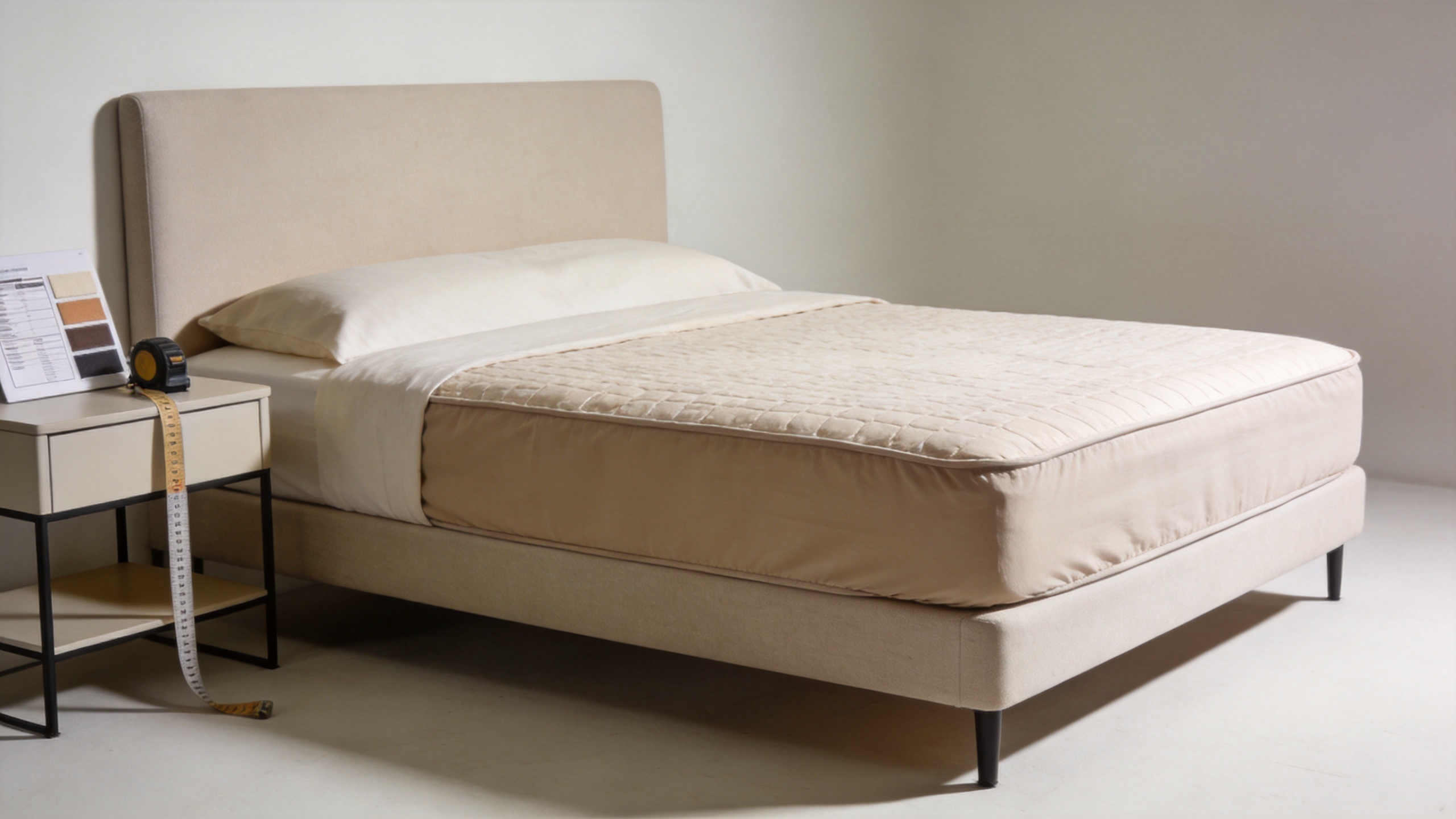
A coordinated offer may place the topper cover above the mattress while a bed skirt frames the base. In that case, check that the drop, elastic placement, and visual proportions work together. When bed sets full are part of the line, map each item’s size naming, included pieces, color codes, and care label so a shopper does not assume components are interchangeable.
Build customization and MOQ into the RFQ
Customization should be converted into a short, reviewable brief. A useful inquiry for a mattress topper cover should specify finished size, topper thickness range, fabric construction, color or pattern reference, elastic or closure preference, label language, packaging, destination market, and the confirmations required before bulk production. Separate confirmed requirements from options that still need supplier confirmation.
| RFQ checkpoint | What to confirm | Why it matters |
|---|---|---|
| Size and fit | Finished dimensions, depth range, tolerance, elastic layout | Reduces mismatched samples and inconsistent fit claims |
| Materials | Composition, construction, any functional layer, approved care instructions | Keeps material language separate from unverified performance wording |
| MOQ and mix | MOQ by size, color, packaging, and any custom trim | Shows whether the assortment can support bed sets full or standalone sales |
| Quality plan | Sample approval points, inspection level, defect definitions, wash-test method | Creates a common acceptance basis before shipment |
| Lead time | Sample timing, material confirmation, bulk schedule, packing approval | Helps buyers compare proposals on the same planning assumptions |
Use sample approval and quality checks that buyers can repeat
For a mattress topper cover, the approval sample should be reviewed on the relevant topper, not only laid flat on a table. Check the finished dimensions, seam consistency, elastic tension or closure operation, label placement, appearance after the agreed wash method, and the way the cover returns to shape. If your destination market requires compliance or flammability evidence, request documentation that matches the finished product scope, construction, and market; requirements such as U.S. mattress-set rules cannot be assumed to apply automatically to every cover configuration.
Set incoming inspection checkpoints before the purchase order is released. Good checkpoints include measurement tolerances, fabric and trim confirmation, visual defect criteria, packaging count, barcode or label artwork, and an agreed photo record. A final inspection is more useful when these points were already agreed at sample stage.
Plan care, replenishment, and the coordinated range
Care information belongs in the buying decision, not only in post-purchase instructions. Ask how often the end user is expected to wash the item, whether low-heat drying is acceptable, and how the cover will be re-fitted after laundering. It can suit an assortment, but the final fit still depends on the approved specification and target market.
For buyers developing a wider bedroom story, HENIEMO’s confirmed product catalog can serve as a reference point for adjacent duvet-cover styling. Review the available customized cationic stripe duvet cover set or the microfiber crinkle solid duvet cover set as adjacent category references. Confirm their current specifications directly before using them in a combined program; their links do not establish mattress topper cover specifications.
Bulk-buying comparison checklist
- Define the use case: topper enclosure, protective layer, or coordinated bedding component.
- Match finished dimensions and depth to the actual topper, not only the named bed size.
- Compare fabric, construction, fastening, and care under the same sample conditions.
- Ask for MOQ by each customization variable, rather than a single headline quantity.
- Agree sample approval, inspection points, packing details, and lead-time milestones in writing.
- Check how the mattress topper cover sits with bed sets full and a bed skirt in the intended retail presentation.
A well-planned mattress topper cover program gives both buyer and supplier a clearer approval path. Focus on fit, construction, care, and verification first; then compare MOQ, packaging, and timing using the same assumptions. That approach makes it easier to build a practical assortment without overstating what an unapproved specification can deliver.