
 EN
Bedspread Double: Commercial Use Guide
For an overseas buyer, a bedspread double is not a simple decorative SKU. It is a working specification: the target bed dimensions, finished drop, material and fill approach, construction, pattern approval, packing, inspection plan, and delivery window all need to agree. As a B2B sourcing planner, I would define those points before comparing quotations. That sequence makes a bedspread double easier to sample, approve, and repeat across a retail or hospitality program.
Start with the commercial use, not the fabric label
First clarify where the bedspread double will be used. A supermarket range may need clear shelf presentation and coordinated colors. A hospitality program may prioritize repeatable dimensions, laundering instructions, and replacement continuity. An online collection may need photography, a precise component list, and a market-specific size chart. The same fabric can suit different briefs differently once wash frequency, target price architecture, packing, and order cadence change.
Write the use case into the RFQ: destination country, retail channel, season, bed dimensions, desired side and foot drop, intended set pieces, label language, and pack format. This works better than asking for a “standard” bedspread double, because double-size labels differ by market. One published reference lists a U.S. full/double mattress at 54 by 75 inches, while another published guide uses roughly 200 by 200 cm for a double bedspread. Treat these as examples of why the buyer must provide actual measurements rather than a universal rule.
Build the specification around material, function, and construction
For each bedspread double, ask the supplier to separate the face fabric, backing, filling if any, quilting or stitch construction, edge finish, weight, and care-label requirement. A material name alone does not describe how an item will drape, cover the bed, or behave in a laundry routine. If hand feel matters, translate it into measurable or reviewable choices such as fiber content, weave or knit, finish, construction sample, and approved color standard.
- Function: decide whether the item is primarily a decorative cover, a lightweight quilted layer, or part of a coordinated bedding set.
- Coverage: confirm finished width, length, shrinkage allowance where relevant, and required drop on each side.
- Construction: approve quilting layout, stitch density where specified, corners, binding, and any reversible design before bulk cutting.
- Care: request the exact proposed care label and check it against the channel’s expected wash routine.
A floral bedspread introduces an additional control point: artwork scale and placement. Ask for strike-off or print approval, color standard, repeat direction, and tolerance for visible placement variation. Do not assume a floral motif will look the same on every finished bedspread double unless the approval document states the placement rule.
Size and style decisions for double and full beds
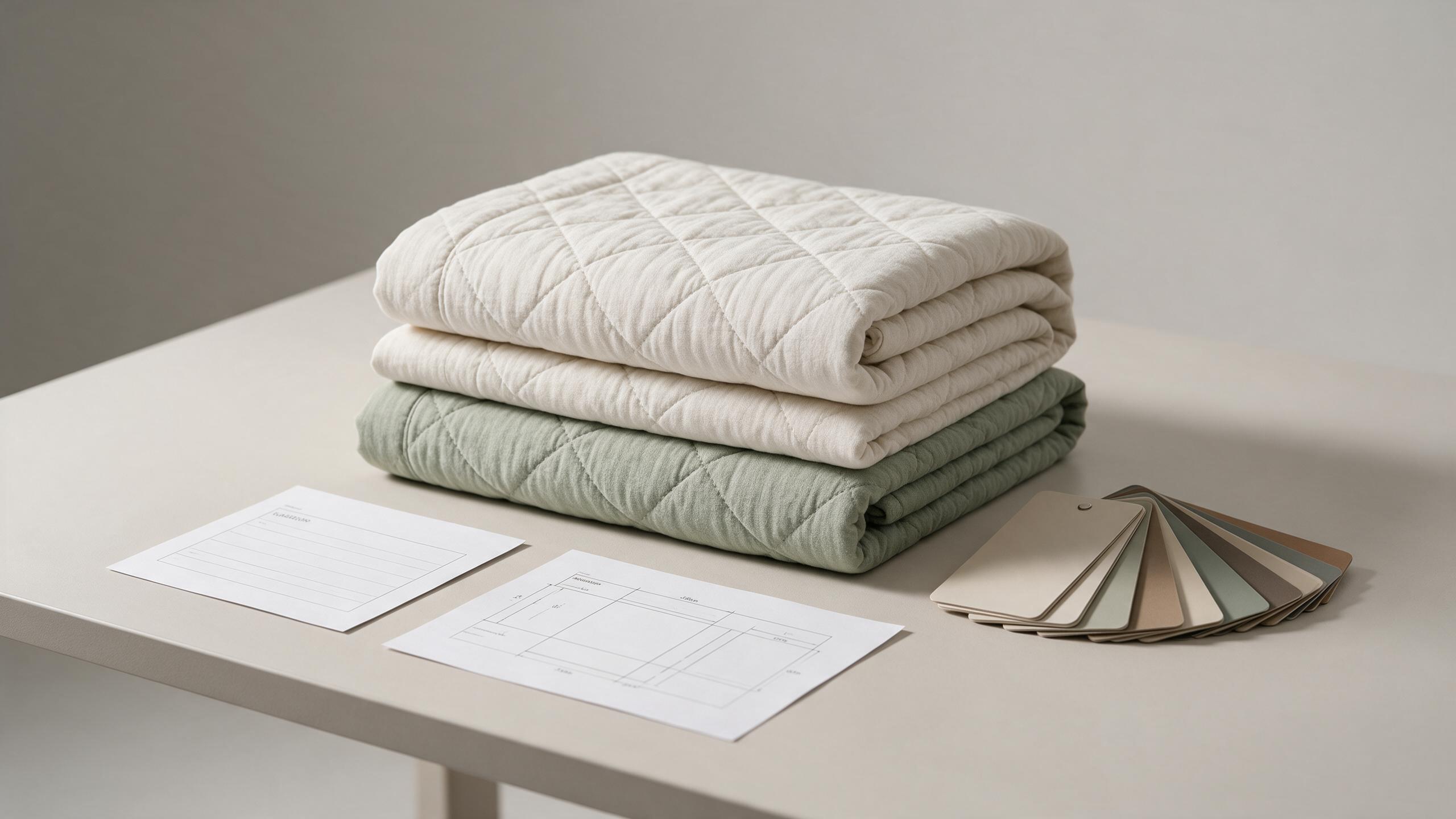
“Double,” “full,” and regional equivalents should be treated as buyer-language clues, not finished dimensions. A full size bedspread program may be intended for a full mattress in one market, while a double label elsewhere may refer to another measurement convention. Use a simple sequence: confirm mattress width, length, and height; choose the desired top coverage and drop; then calculate the finished bedspread double dimensions with the supplier. Add a measurement diagram to the tech pack so a factory, inspector, and buyer use the same reference.
Style should follow the channel brief. A restrained quilt pattern can support broad assortment coordination, while a floral bedspread may be appropriate for a seasonal or room-led collection. Neither is automatically the stronger commercial choice. Compare pattern scale, colorway count, packaging image requirements, and expected replenishment risk before selecting a final bedspread double design.
Turn customization and MOQ into an approval path
Customization requests often affect material sourcing, print preparation, trims, labels, packing, and production sequencing. Instead of treating MOQ as one number, request the MOQ basis for each variable: fabric color, print design, size, set configuration, label, and packaging. This helps the buyer see whether a lower order quantity changes the available choices or the lead-time path.
- Submit a technical brief for the proposed bedspread double, including dimensions, components, material target, artwork, care label, and packing.
- Approve a development sample and record all revisions in one version-controlled sheet.
- Confirm a pre-production sample against the approved brief before bulk manufacture.
- Lock the inspection criteria, defect classifications, and sampling approach before results are known.
- Approve shipping marks, carton configuration, and document requirements before final inspection.
For reference when comparing construction options, review the Honeymoon wholesale bedding set and the modern quilt-set collection. Confirm product-specific dimensions, components, materials, and customization scope with the supplier rather than inferring them from a product title.
QC checkpoints that protect a bulk order
Quality control for a bedspread double should check the approved specification, not just visible appearance. AQL is a sampling framework in which the buyer defines acceptable thresholds for critical, major, and minor defects. The right plan depends on the program. Agree it before inspection rather than selecting it after defects are found.
| Checkpoint | What to verify | Buyer record |
|---|---|---|
| Pre-production | Fabric, artwork, color, dimensions, components, care label, and pack sample | Signed approval sheet |
| Inline | Cutting, print placement, stitching, quilting, measurements, and labeling | Issue log and corrective action |
| Final random inspection | Appearance, measurements, seams, labels, packing, carton marks, and agreed sampling criteria | Inspection report and release decision |
Plan lead time and compare quotations like for like
Lead time for a bedspread double usually begins with the approved specification, not the date an inquiry is sent. It can depend on fabric availability, dyeing or print approval, sample revisions, accessory sourcing, production scheduling, final inspection, and shipping booking. Ask suppliers to show the sequence and assumptions behind their proposed timeline. If the launch date is fixed, identify which approvals must be completed first and where a late artwork or packaging decision can move the schedule.
For a fair bulk comparison, put every supplier response into one matrix: finished dimensions, construction, materials, component count, artwork method, test or inspection plan, MOQ by variable, packaging, lead-time assumptions, shipping terms, and documents included. A low unit quote for a bedspread double is not directly comparable if it omits a packing requirement, uses a different size, or assumes a different inspection scope.
Buyer checklist before placing the order
- Have you confirmed the destination-market mattress measurements and required drop?
- Does the approved sample match the intended bedspread double construction and component list?
- Are floral bedspread artwork, color, and placement rules documented?
- Are full size bedspread labels aligned with the market’s actual dimensions?
- Are MOQ, QC criteria, packing, and lead-time assumptions written into the order file?
A commercial bedspread double order becomes easier to control when each choice is converted into a documented requirement. Start with the channel and bed measurements, then approve the material and style, lock the sample and quality plan, and compare bulk offers on the same scope. That gives overseas buyers a clearer route from inquiry to a repeatable delivery process.