
 EN
Coverlet Set: Hotel Buyer Checklist
A hotel coverlet set is not simply a decorative top layer. For a procurement team, it is a repeat-use textile decision that affects room presentation, laundry handling, replacement planning, and the consistency of a property or group rollout. As a B2B sourcing planner, I would start a coverlet set brief with the operating context: room type, bed dimensions, expected laundry route, market, and the level of visual coordination required.
Retail search results for a coverlet set often focus on color, pattern, or a named size. Hotels need a different comparison. The useful shift is from asking whether a design looks suitable to asking whether the specification can be repeated, inspected, packed, and replenished. That sounds technical, but the next question is simple: can the supplier document each requirement before bulk production begins?
1. Define the hotel use case before selecting a coverlet set
Write a short use-case statement before requesting samples. Identify whether the coverlet set is intended for guest rooms, suites, serviced apartments, display rooms, or a seasonal refresh. State the bed base dimensions and whether pillows, shams, runners, or other components are part of the request. A set with more listed pieces is not automatically a better fit unless every piece has a defined role.
- Target property type, room count, and replenishment expectation
- Bed width, length, mattress height, and the finished drop required on each side
- Included components and quantities per room
- Target market, care route, labeling language, and packing requirements
- Sample approval owner and the conditions for bulk release
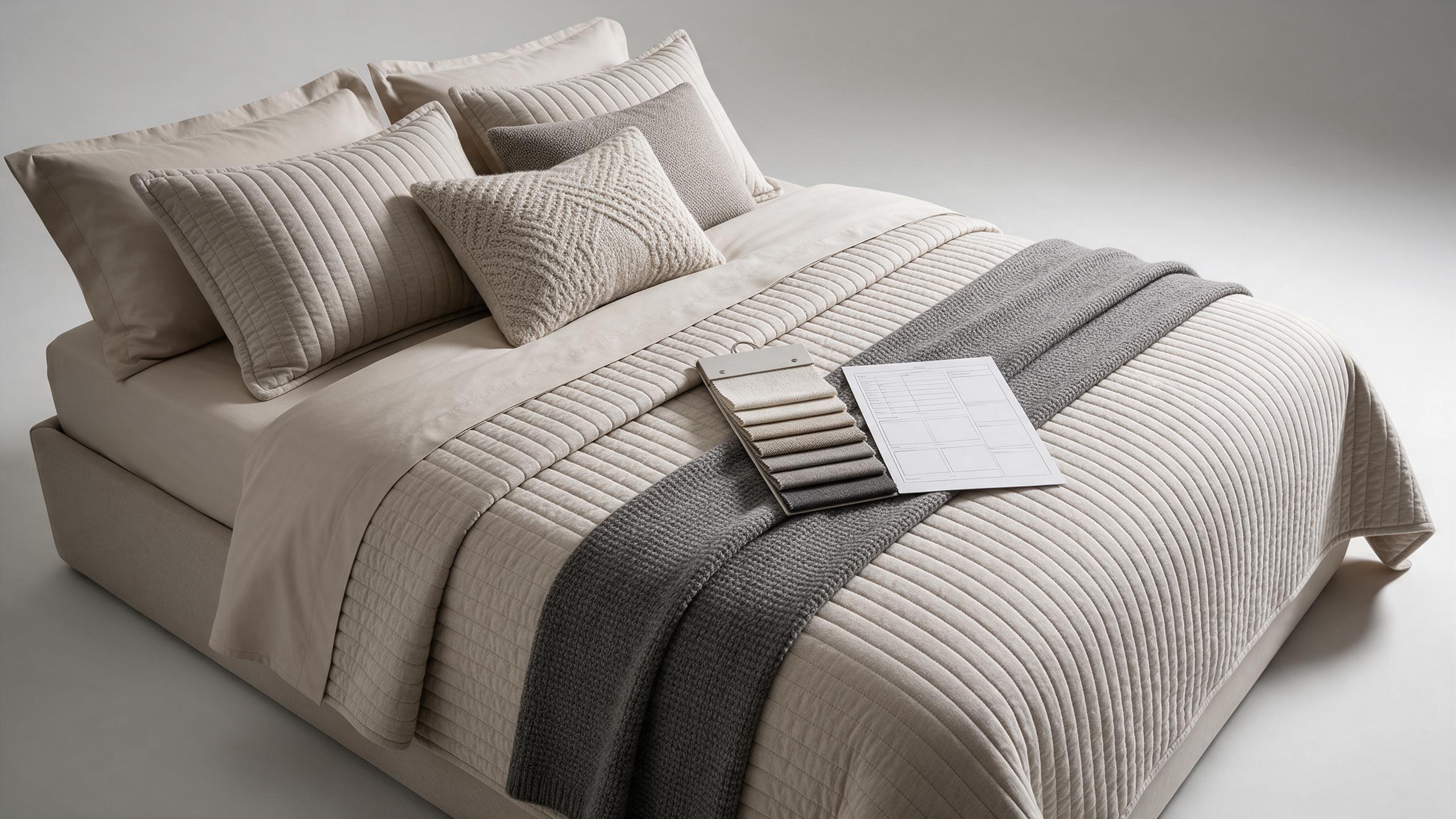
This first page of the brief prevents a common problem: treating a hotel coverlet set as a generic bedding item when the dimensions, use cycle, and presentation standard are actually different.
2. Compare material and construction as separate decisions
Do not let a fiber name stand in for a full coverlet set specification. Ask for the proposed face fabric, filling or wadding approach if applicable, backing, construction, finishing, and care-label guidance. Then ask how those items are measured or controlled for the exact proposed product. Material, quilting pattern, edge finish, stitch density, color, and hand feel are separate inputs; they should appear separately in the sample approval sheet.
For hotels, the practical question is whether the proposed coverlet set aligns with the laundry process and visual standard your property can support. Avoid turning a general textile description into a promise about durability, comfort, or service life. Instead, request the relevant test plan and acceptance criteria. For example, AATCC lists TM61 as an accelerated colorfastness-to-laundering method; your buyer and supplier should confirm whether it is applicable, which version applies, and what result is required for the intended textile.
3. Make size labels measurable
An oversized king coverlet can be a useful search term, but “oversized” and “king” are not complete specifications. Bed labels vary by market, so a hotel coverlet set needs a dimension table in millimeters or inches, together with tolerances and the intended finished drop. Confirm measurements after laundering only if the parties have agreed that process and method beforehand.
The same discipline applies to a queen coverlet. Rather than assuming a queen label fits every installation, compare the actual bed dimensions, mattress profile, pillow arrangement, and desired visual coverage. Use an approved sample on the intended bed whenever possible. First confirm the bed dimensions, then compare construction and care, and only after that assess decorative preferences.
4. Choose style without losing operating clarity
A hotel coverlet set can support a clean, layered bed presentation, but styling should be documented in a way that production and housekeeping teams can follow. Capture the approved color reference, pattern scale, quilting layout, edge treatment, component placement, and front-versus-reverse orientation. If embroidery, a woven label, or branded packaging is requested, provide approved artwork, placement dimensions, and a sign-off route.
For an initial product review, buyers can examine HENIEMO’s wholesale bedding and coverlets listing and its king quilt-set listing. These links identify available catalogue records; they do not confirm hotel suitability, composition, custom options, or performance for your order. Request the current item-level specification before using either listing as a bulk coverlet set reference.
5. Turn customization, MOQ, and lead time into written checkpoints
Customization discussions are stronger when they separate confirmed requirements from options that still need supplier confirmation. For a coverlet set, ask which changes affect material sourcing, sampling, production sequencing, carton design, labeling, or inspection. Do not assume that a catalogue product has a particular MOQ, private-label option, capacity, or lead time.
| Buyer checkpoint | What to confirm in writing |
|---|---|
| Customization scope | Fabric, color, quilting, dimensions, components, labels, artwork, packaging, and approved tolerances |
| MOQ and quotation basis | MOQ by color and size, price basis, sample charges, and whether the proposal covers the same component list |
| Lead-time plan | Sample stage, material confirmation, production window, inspection timing, and shipping handoff assumptions |
| Bulk comparison | Match dimensions, construction, packing, inspection scope, and commercial terms before comparing quotations |
The first sourcing question is often not price but whether the coverlet set brief specifies material, dimensions, packing, market, and approval stages. A lower figure is not comparable if the scope changes.
6. Build QC around the approved sample, not a product name
Use a pre-production sample as the physical reference for the hotel coverlet set. The QC plan should state what is checked, how many units are inspected, the allowed tolerance, and the response if a result falls outside the agreed limit. A buyer checklist can include fabric and shade review, finished measurements, quilting and stitching appearance, edge construction, component count, label placement, packing, carton marks, and cleanliness. Add any test or inspection requirement only after agreeing the relevant method and acceptance criteria.
Before final release, compare the bulk coverlet set against the signed sample and the written specification—not against memory, a marketplace image, or a broad material label. Consistency across the order matters more than one attractive sample.
7. Put care and replenishment into the purchase decision
Care guidance should be part of selection, not an afterthought. Request the product-specific care label and clarify who will wash the coverlet set, what equipment and chemistry are expected, and how replacements will be ordered. General advice cannot replace item-level instructions because construction and finishing can change the appropriate routine.
Close the RFQ with a request for a specification sheet, component list, dimension chart, sample timeline, MOQ basis, proposed QC plan, packing detail, and lead-time assumptions. That gives the supplier a clear response path and gives your team a like-for-like way to compare each hotel coverlet set offer.