
 EN
Lightweight Bedspread: Market Positioning Guide
A lightweight bedspread is easy to position badly. Buyers often begin with a fabric name or a color story, yet the commercial question is broader: which room, climate, customer segment, care routine, and price tier is the item meant to serve? For a buyer building a retail or wholesale range, a lightweight bedspread should be evaluated as an assortment role—not simply as a thinner version of another bed covering.
From a B2B sourcing planner’s perspective, the useful starting point is the intended use. A lightweight bedspread can suit warm-season displays, layered guest-room presentation, transitional assortments, or shoppers who prefer a less bulky top layer. The final fit still depends on approved specifications, target-market dimensions, and the care information attached to the exact construction.
Position the lightweight bedspread before comparing fabrics
A lightweight bedspread usually occupies the space between decorative coverage and a more substantial sleep layer. That sounds simple, but the buyer brief needs to say whether the product will be used alone, over a sheet set, as a visual top layer, or as part of a coordinated bedding set. A lightweight bedspread for a supermarket assortment may need a clear, easy-to-explain role; one for a hospitality-oriented brief may put more emphasis on repeatable sizing, care communication, and replacement planning.
Define the channel and shopper first. Then ask which priorities matter: low visual bulk, a textured surface, a particular drape, seasonal relevance, coordinated shams, or a practical laundering routine. This avoids treating “lightweight” as a universal performance promise. Comfort impressions and warmth needs vary with room conditions, layering habits, and user preference.
Use a matched selection matrix
| Decision area | What to compare | Question for the buying brief |
|---|---|---|
| Use case | Standalone coverage, layering, display, guest-room use | How will the lightweight bedspread be used in the customer’s routine? |
| Material and construction | Fiber content, weave or quilted construction, finish, weight declaration | Which details are confirmed on the product specification? |
| Size | Finished width, length, drop, and included components | Which measurements—not just size names—fit the target market? |
| Care | Wash, dry, ironing, and warning instructions | Can the supplier support care instructions for this exact construction? |
| Presentation | Colorway, pattern, packaging, and set configuration | What will distinguish the lightweight bedspread on shelf or online? |
Material is one input, not a shortcut to the whole decision. A linen bedspread may appeal where buyers want a natural-looking, relaxed surface, while a matelasse bedspread may be considered where a raised, quilt-like visual texture supports the collection story. Neither label confirms durability, wash behavior, dimensions, or a particular hand feel. Request the approved composition, construction, finished measurements, and care directions before turning a material description into a selling claim.
Choose size and style with the end market in view
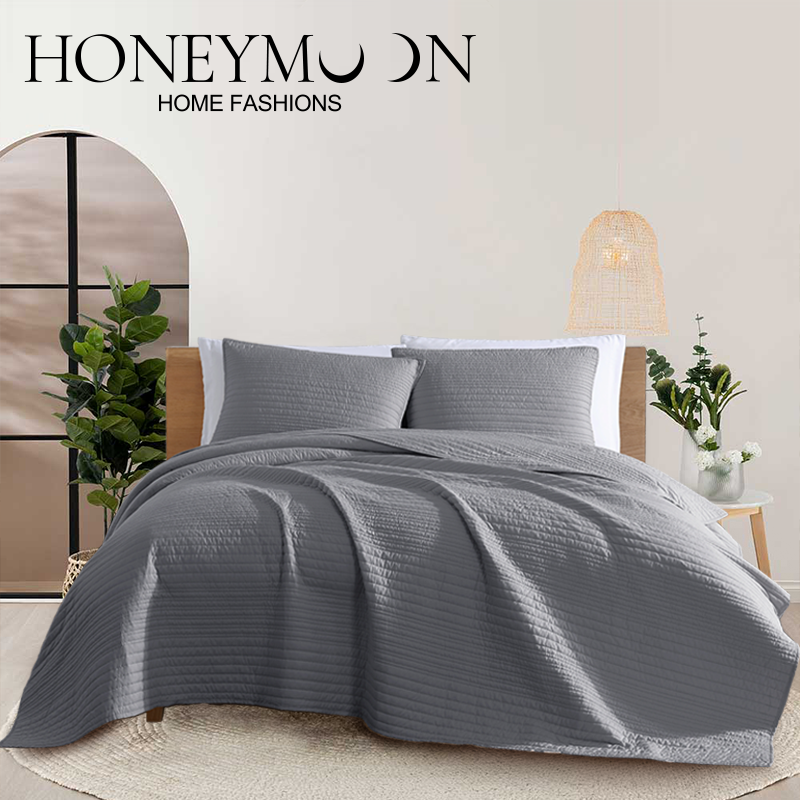
Regional bed-size labels are not enough for a lightweight bedspread. Ask for finished measurements in the required unit, the intended mattress range, and the expected side drop. If pillow shams or other pieces are included, list them plainly. A buyer comparing a lightweight bedspread across suppliers should align the component list before comparing appearance or cost.
Style is also a range decision. A linen bedspread can support an edited, casual visual direction; a matelasse bedspread can support texture-led merchandising; a smooth quilted option can fit a different collection brief. The stronger question is not which style is universally preferable. It is which construction, pattern scale, and color direction make sense for the intended channel and replenishment plan.
Use verified product pages as starting points, not specification substitutes
For a discussion with a supplier, buyers can review HENIEMO’s wholesale bedding set with quilt bedspread and coverlets as a category reference. The page provides a product-specific conversation point, but the buyer should still confirm the current composition, dimensions, included pieces, available options, order terms, and care information directly with the supplier.
A second reference is the three-piece king quilt set. It can help a buyer clarify the difference between a quilt-set presentation and a lightweight bedspread brief. Product-page titles and images do not replace an approved specification sheet, especially when a range will be offered in several markets.
Turn customization, MOQ, and lead time into confirmation points
Do not assume a lightweight bedspread can be customized in every way or that one order condition applies to every configuration. A practical inquiry separates confirmed requirements from options to verify. State the intended market, dimensions, material preference, construction direction, color or pattern approach, set components, packaging needs, expected order quantity, sample requirement, and requested delivery window.
For MOQ and lead time, ask for the supplier’s current response against the exact brief rather than using a generic number. A change in size, trim, print, packaging, or component count may affect the commercial discussion. If the assortment includes a linen bedspread and a matelasse bedspread, request separate quotations and confirmation points so that the comparison remains like for like.
Build quality acceptance into the sourcing plan
Quality review should begin before bulk production. Agree which approved sample, measurement tolerance, color reference, labeling requirement, packing presentation, and workmanship criteria will be checked. ISO 2859-1 is an example of an attribute-inspection sampling framework that a buyer may discuss with an inspection provider; the acceptance plan, inspection level, and any AQL requirement must be agreed for the actual order rather than assumed.
Care information deserves the same attention. Applicable market rules may require regular-care communication, and care statements should have a reasonable basis for the product construction. Ask the supplier to provide approved care instructions for the selected lightweight bedspread, then check that online copy, packaging, and labels use the same scope. This protects the buyer from describing a care routine that has not been confirmed.
Bulk-buying checklist for a lightweight bedspread
- State the target channel, climate assumptions, and the item’s role in the bedding range.
- Confirm finished measurements, drop expectations, and every included component.
- Request composition, construction, weight declaration, and care details for the exact option.
- Compare linen bedspread and matelasse bedspread options against matched criteria, not names alone.
- Ask which customization requests, order quantities, sample steps, packaging options, and delivery windows are currently available.
- Document sample approval and an attribute-based inspection plan before committing to bulk production.
The market position of a lightweight bedspread becomes clearer when the brief is complete. Start with the channel and end use, compare materials and construction with matched measurements, and carry care and acceptance questions through to the final order. That approach gives overseas buyers a usable selection path while leaving room for item-level supplier confirmation.