
 EN
Single Bedspread: Durability Testing Guide
A single bedspread is often selected for a compact bedroom, a guest-room programme, a student-housing range, or a retail assortment where a clear bed-size offer matters. For an overseas buyer, however, the question is not simply whether a single bedspread looks coordinated on a bed. It is whether the proposed construction, dimensions, colour treatment, care route, packing, and inspection plan are appropriate for the intended channel. A B2B sourcing brief becomes much easier to compare when those checks are defined before a quotation is judged.
Start with the decision rather than the fabric label. A single bedspread can be woven, knitted, quilted, or built from multiple layers; a material name alone does not explain seam stability, surface appearance after laundering, or how the item will behave in a repeated-use setting. This guide helps buyers turn a visual request into a practical durability review.
Define what durability means for your single bedspread programme
Durability is not one universal score. For a retail single bedspread, appearance retention, colour consistency, and presentation may lead the brief. For accommodation use, wash frequency, seam integrity, and handling may receive more attention. Before comparing suppliers, write down the use case, expected laundry route, target market, planned display, and approval owner.
- Fit and coverage: confirm mattress width, length, depth, desired drop, and whether pillows are included in the display concept.
- Construction: request the face fabric, filling or backing where relevant, stitch or quilting layout, edge treatment, and component list.
- Appearance: define the approved shade, pattern placement, texture, and acceptable variation between production lots.
- Care: request the proposed care label and ask whether the sample and bulk order will follow the same construction and finishing route.
That sequence matters. A green bedspread or grey bedspread may fit a collection visually, but the colour choice should be reviewed alongside the intended rubbing, washing, light-exposure, and storage conditions. Decorative preference comes after a usable specification, not before it.
Build a testing plan buyers can verify
A useful single bedspread test plan names the sample, method, condition, acceptance criterion, and report owner. Ask the supplier what tests are relevant to the proposed fabric and market rather than assuming every test applies. ASTM lists D4037-24 as a performance specification for woven, knitted, or flocked bedspread fabrics; it is a useful reference point for asking about an appropriate bedspread-fabric evaluation plan, not proof that a particular item has passed it.
For coloured options, ask which colourfastness checks are relevant. ISO 105-X12 is a controlled method for determining colourfastness to rubbing. If a green bedspread or grey bedspread is being considered, agree beforehand whether dry and wet rubbing, wash appearance, and shade approval need to be assessed. Ask for the actual method version, laboratory or internal-test identity, sample condition, result format, and agreed threshold. Do not convert a test-method name into a performance promise without the corresponding report.
| Buyer checkpoint | What to request | Why it matters |
|---|---|---|
| Surface wear | Relevant abrasion or appearance-retention method, sample condition, and result | Helps compare how the selected face fabric is evaluated for repeated contact. |
| Colour control | Approved swatch, lot standard, and relevant rubbing or wash test evidence | Supports a more controlled review of a green bedspread or grey bedspread. |
| Seams and edges | Construction sheet and inspection points for stitching, binding, and corners | Turns “durable” into observable acceptance criteria. |
| Care route | Care-label draft and any applicable wash-trial record | Links the single bedspread selection to its real maintenance routine. |
Compare materials, size, function, and style on like-for-like terms
When reviewing a single bedspread, compare matched specifications. A light decorative layer and a heavier quilted construction may both suit a single bed, but they should not be judged using inconsistent assumptions about performance. First confirm dimensions and included components; then compare face fabric, backing, filling if applicable, quilting or stitch pattern, edge finish, weight, care instruction, and packing. Only after that should colour and pattern drive the final shortlist.
This is especially useful when building a coordinated range. A grey bedspread may be a flexible neutral option, while a green bedspread may create a seasonal or visual focal point. Neither colour says anything by itself about construction quality. Request a labelled pre-production sample for the exact option under consideration and retain the approved version as a reference for later inspection.
Use matched product pages as a starting point, not a substitute for specifications
For collection research, review the Popular Luxury Super Soft Custom Modern Quilt Set King Quilt 3 Pieces product page alongside your own single bedspread brief. The page is an internal product reference; it should not replace confirmation of size, composition, components, test scope, or availability for your request. Ask which elements can be confirmed for the sample you intend to approve.
Buyers who are mapping a wider range can also review the HENIEMO home-textile collection as a site-navigation starting point, then request item-specific documentation for the single bedspread under consideration.
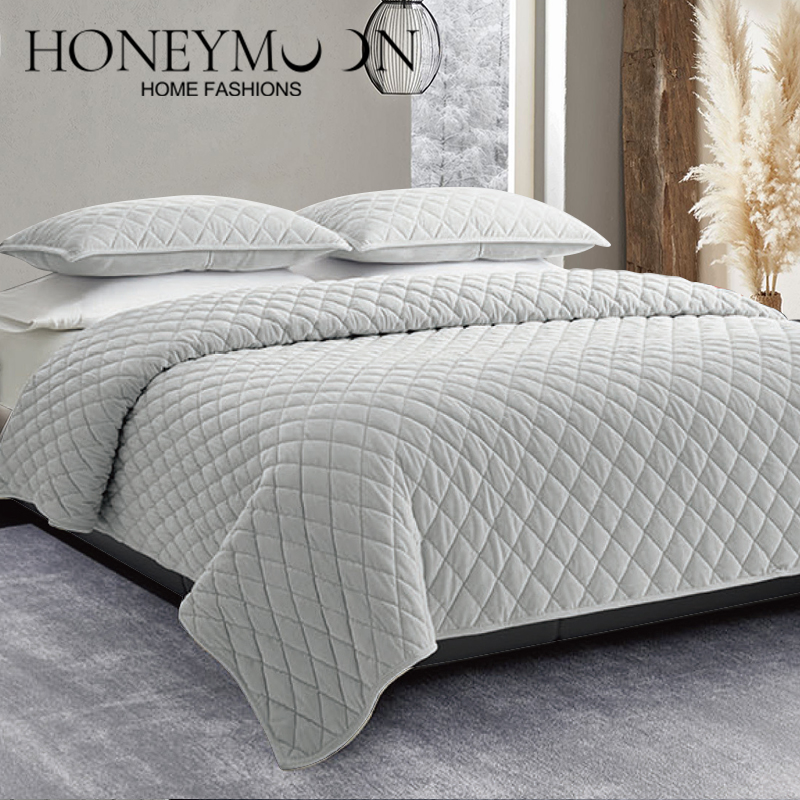
For any proposed customization, document the requested size, colour, pattern, label, packaging, quantity, target market, and sample sign-off route. Customization, minimum order quantity, and lead time are commercial variables that need supplier confirmation; they should be confirmed with the supplier rather than inferred from a general product title.
Set quality acceptance before bulk production
A practical single bedspread acceptance plan has three stages. First, approve a specification sheet and physical or visual sample. Next, confirm the pre-production sample against the approved swatch, dimensions, construction, care label, and packing requirements. Finally, agree the inspection stage for bulk goods, including which defects are critical, which are tolerable, the sampling approach, photo requirements, and who signs the release.
- Use the same single bedspread measurement points across supplier comparisons.
- Keep a clear version record for the approved green bedspread or grey bedspread colour standard.
- Request confirmation of MOQ, sample timing, bulk lead time, and packing before placing the purchase order.
- Require any requested test report to identify the actual sample and method, not merely a generic statement.
Care, delivery, and bulk-buying checklist
Care guidance belongs in the purchase decision because it affects the customer experience after delivery. Ask how the selected single bedspread should be washed, dried, stored, and presented, then compare that route with the buyer’s channel and return-handling realities. For bulk buying, map the order timeline from sample approval through materials, production, inspection, packing, and shipment. A shorter quoted lead time is less meaningful if colour approval, packaging details, or test requirements remain open.
Before issuing an RFQ, send one concise checklist: single bedspread dimensions; construction and component expectations; selected green bedspread or grey bedspread shade; required documents or tests; target market; packaging; MOQ; sample deadline; bulk delivery window; and inspection acceptance points. That turns a vague durability request into a reviewable sourcing decision and gives every supplier the same basis for response.